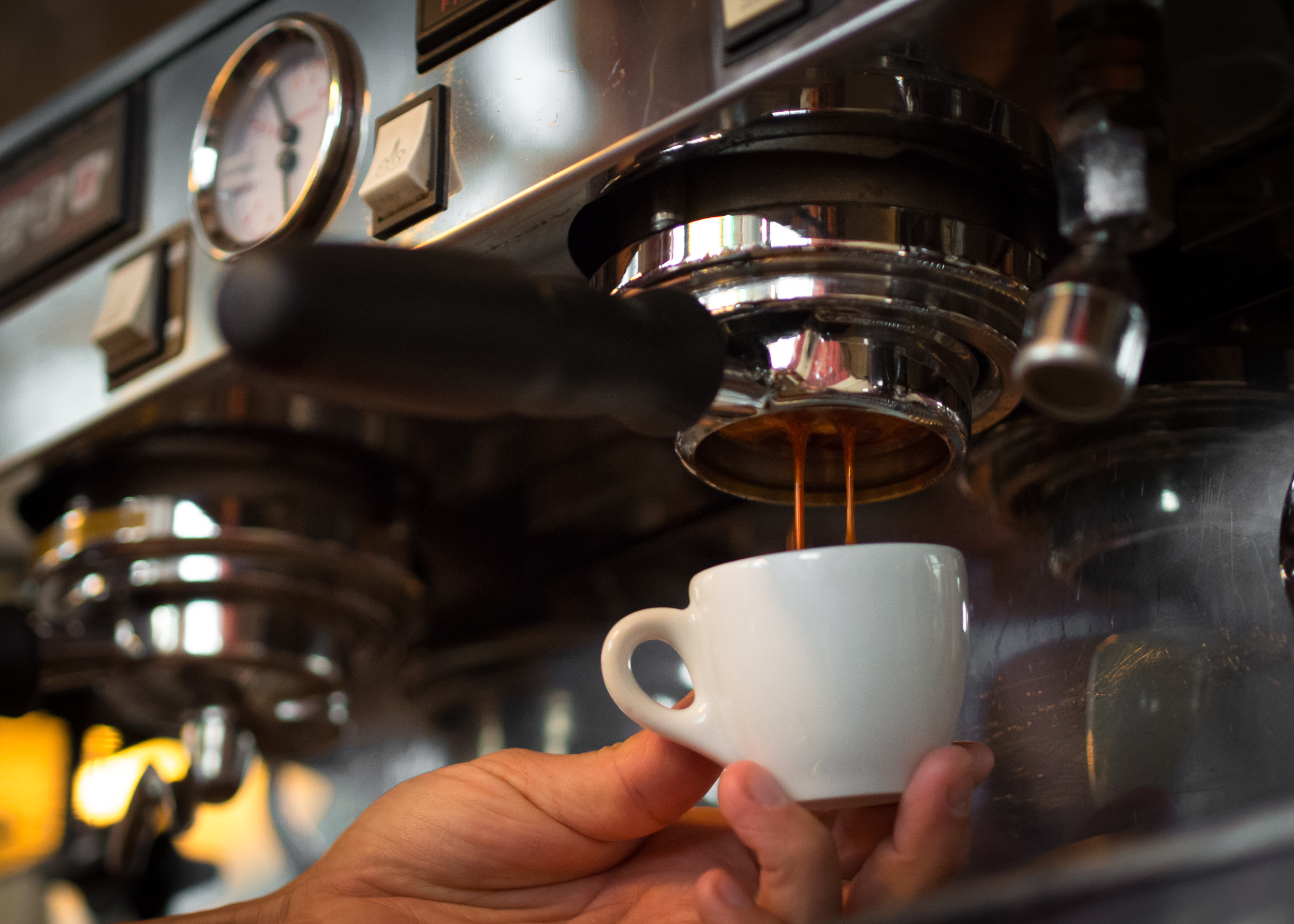

Good cafe equipment is defined less by brand or features than by five plain criteria: it is certified for sanitation where your health department requires it, it is easy to clean, it holds food at safe temperatures, it fits your utilities, and someone nearby can service it. Buy against those criteria first and compare espresso machines second. Get it the other way round and you can end up with a beautiful machine sitting next to a refrigerator or sink that fails your inspection.
Key takeaways
- Ask your health department which equipment must carry a sanitation certification before you buy anything.
- Countertop equipment must be easy to clean around: movable, sealed or raised on legs.
- Refrigeration needs to hold cold food at the temperature your local code sets, with a thermometer in each unit.
- Hand sinks, a warewashing setup and a food prep sink are separate items with separate rules.
- Energy-efficient models exist for many café staples, including coffee brewers, dishwashers and refrigerators.
Criterion 1: Sanitation certification for café equipment
Health departments generally expect commercial equipment, not domestic appliances. The Anoka County, Minnesota plan review guidelines are a clear example. They say certain equipment must be certified or classified for sanitation under American National Standards Institute (ANSI) standards, and list manual warewashing sinks, mechanical warewashing equipment, mechanical refrigeration units, hot holding equipment, cooking equipment, ice machines and food preparation surfaces among them. Food-contact surfaces must be certified as well.
Rules in your area may be worded differently, because local codes are based on the FDA’s model Food Code as each state adopts it. Before you buy, ask your health department for its plan review guide, and check the data plate or certification listing on any machine you are considering, new or used.
Criterion 2: Cleanability and installation
Inspectors look at how equipment sits, not just what it is. Anoka County’s guide says countertop equipment must be easily cleanable and movable; if it is not easily movable, it must be sealed to the counter or installed on legs of a set height. Preparation surfaces must be smooth, durable, nonabsorbent and easily cleanable.
When you compare machines, ask:
- Can you reach every surface that touches food or drink without tools?
- Will it sit on legs or casters, or will it need sealing?
- Are drip trays, steam wands and grinder hoppers easy to remove and wash?
- Does the layout leave room to clean behind and beside it?
Criterion 3: Cold holding and refrigeration
Milk, sandwiches and many pastries need reliable refrigeration. Anoka County requires refrigeration units to hold food at 41 degrees Fahrenheit or less and to have ambient air thermometers, and it notes that food may not be stored on the floor of refrigeration units. Your local code sets the figure that applies to you, so confirm it.
Size matters as much as temperature. A small under-counter fridge that is opened every few seconds during a rush will struggle more than a larger unit. Think about where milk is stored for the espresso station, where prepared food goes, and where deliveries are unpacked.
Criterion 4: Sinks and warewashing
Sinks are where many first-time café plans go wrong, because each sink has a different job.
| Equipment | What to check | Why it matters |
|---|---|---|
| Hand sinks | Number, location, soap and towel dispensers | Staff must reach one easily from each work area |
| Three-compartment sink | Drain boards, size for your largest items | Washing equipment too big for a dish machine |
| Dish machine | Sanitizer warning device, ventilation, legs or casters | Reliable sanitizing and cleaning underneath |
| Food prep sink | Separate from hand and warewashing sinks | Rinsing produce without contaminating other sinks |
| Refrigeration | Sanitation certification, thermometer, capacity | Safe cold holding during peak service |
| Espresso machine and grinder | Removable parts, cleaning access, service support | Daily cleaning and fast repairs |
Anoka County’s guide, for instance, says three-compartment sinks and hand sinks may not be used for food preparation, and that each hand sink must allow handwashing with water flowing for at least 15 seconds. These details belong in your plan review drawings, which our walkthrough on opening a small café explains.
Criterion 5: Energy use
Cafés run equipment for long hours, so efficiency adds up. The EPA’s ENERGY STAR program lists commercial food service equipment categories that include refrigerators and freezers, ice makers, dishwashers, ovens, hot food holding cabinets and coffee brewers. Where a certified model exists for something you need, it is worth comparing.
Criterion 6: Utilities, service and used equipment
Commercial espresso machines, dish machines and ovens can need dedicated electrical circuits, water lines, filtration and drains. Ask an electrician and plumber to confirm capacity before you order, not after delivery.
Then ask every seller the same questions: who services this model locally, how quickly can they come, and how easy is it to get parts? For used equipment, check the certification listing, inspect for damage to food-contact surfaces, and ask for any service history. Remember that equipment choices also affect your permits, as covered in our checklist of food business licences and permits.
Frequently asked questions
Can I use domestic appliances in a small café?
Usually not for core equipment. Many health departments require sanitation-certified commercial equipment for items such as refrigeration, warewashing and cooking. Ask your local department which items are covered.
Should I buy or lease an espresso machine?
It depends on your cash flow and how much service support you need. Compare the total over the term you expect to use it, including maintenance, and read the contract terms closely.
Is used cafe equipment a sensible choice?
It can be, if it carries the required certification, is in good condition, and parts and service are available. Treat anything without a clear certification listing with caution.
Before you place an order
Draw your counter to scale, mark every piece of equipment, and send the drawing to your health department with your questions. Their answers will narrow your shortlist faster than any brochure. More guides for counter-service businesses are in our small café section.