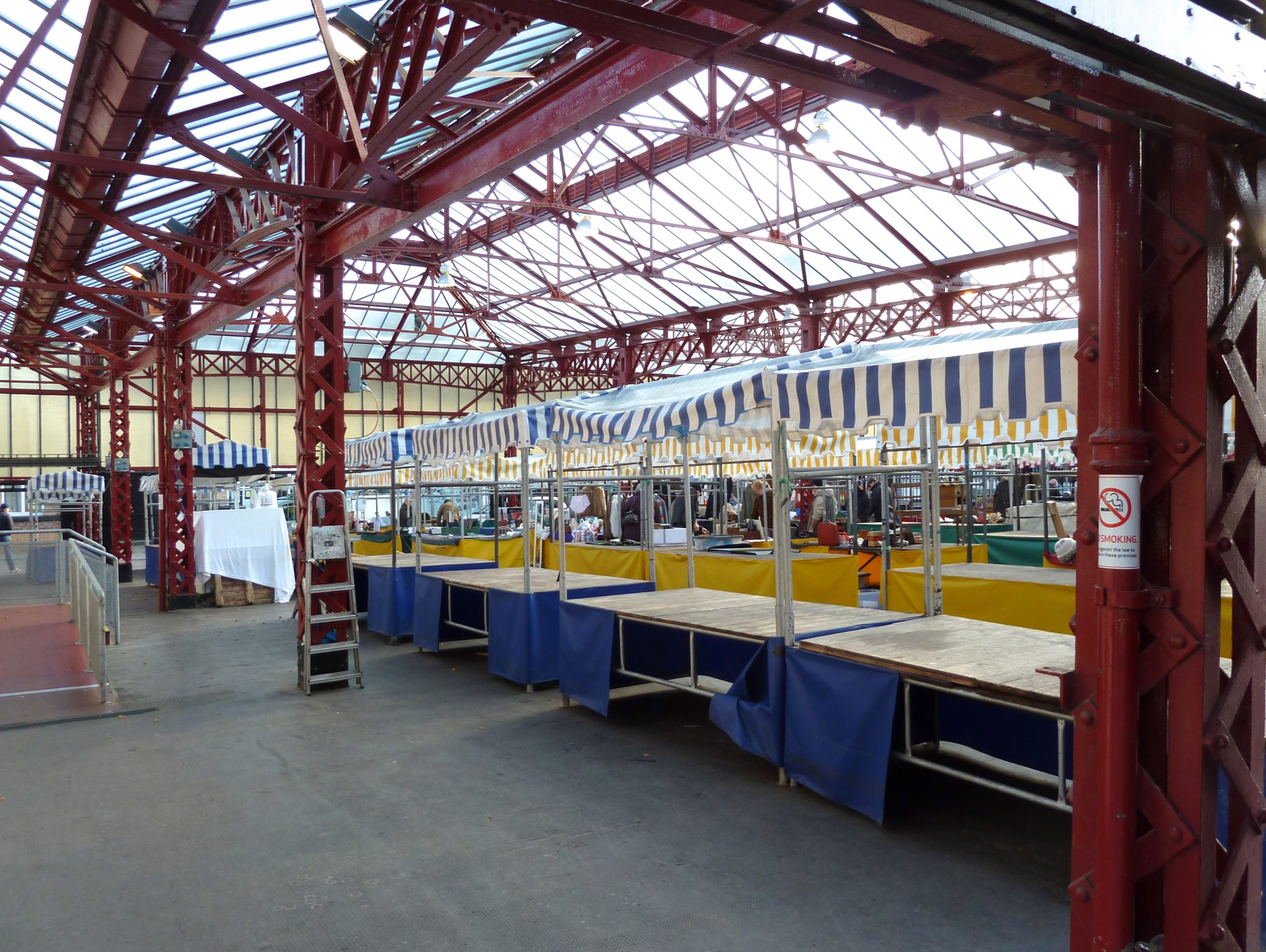

A food market stall setup needs more than a table and a canopy. Most health departments expect overhead cover, a cleanable floor surface, a working handwashing station, a way to wash and sanitize utensils, and equipment that keeps cold food cold and hot food hot. Vermont’s state guidance for temporary events, for example, lists all of these. Buy the items the rules require first, then choose the rest for weight, durability and ease of cleaning. Requirements differ by state, county and market, so check your health department’s and market manager’s lists before you spend anything.
Key takeaways
- Start with the items your health department requires; they are not optional extras.
- A handwashing station needs a continuous-flow spigot, warm water, soap, paper towels and a catch basin.
- Cold food at 41°F or below and hot food at 135°F or above are common US holding standards.
- Judge every item by weight, setup time, cleanability and how it copes with wind and rain.
- If you sell by weight, your scale may be subject to state weights and measures inspection.
Start with what the rules require
Before you browse catalogues, get two documents: your health department’s temporary food guidance and your market’s vendor rules. The Vermont Department of Health’s guide to temporary food service at events, which covers festivals, fairs and farmers markets, is a useful model of what to expect. It requires:
- A handwashing station whenever you operate.
- A three-compartment sink, or three plastic dishpans, to wash, rinse and sanitize utensils and equipment, even if you do not expect to use it.
- Wiping cloths kept in sanitizing solution, with test strips to check the concentration.
- Covered trash containers.
- A tent, canopy or other overhead cover protecting all operations and equipment.
- A floor cover such as mats or a removable platform.
- Cold food at 41°F or below and hot food at 135°F or above, with probe thermometers suited to the food.
Your own jurisdiction may ask for more or less, but this list is a good starting checklist. For the wider preparation around a first market day, see our guide to setting up a farmers market stall.
Market stall setup equipment: what to look for
| Item | What to look for | Common mistakes |
|---|---|---|
| Canopy | Sturdy frame, sidewalls for wind and rain, a way to weight each leg | Buying the lightest frame without planning how to anchor it |
| Floor cover | Mats or a platform that can be swept and wiped | Forgetting it entirely on grass or gravel sites |
| Tables | Stable folding tables with wipeable tops, plus table covers | Too few tables for prep, display and handwashing |
| Cold holding | Insulated chests or powered refrigeration that hold 41°F or below all day | Not planning for extra ice on hot days |
| Hot holding | Equipment that keeps food at 135°F or above | Relying on residual heat from home cooking |
| Thermometers | Probe thermometers for food, and one for each cold chest | Having one thermometer and no backup |
| Handwashing station | Insulated water container, continuous-flow spigot, catch basin, soap, paper towels, bin | Using hand sanitizer instead of a station |
| Washing and sanitizing | Three tubs, sanitizer and test strips | Bringing tubs but no test strips |
| Scale | Suitable for trade use if you sell by weight | Using a kitchen scale for priced sales |
Canopy, flooring and tables
A canopy is the largest purchase for most stall holders, and it does more than keep the sun off. Vermont’s guidance treats overhead cover as a requirement because it protects food and equipment. When comparing canopies, ask how long setup takes for one person, how much the frame weighs, whether sidewalls are available, and how you will secure it. Markets often have their own rules on anchoring, so ask before you buy.
For the floor, a set of interlocking mats or a simple platform keeps dust down and gives you something you can clean. Tables should be stable on uneven ground and easy to wipe. Plan separate areas for handwashing, prep, display and payment so they do not overlap.
Keeping food at the right temperature
Temperature control is where many stalls fail inspections. The Vermont guidance says cold food must be kept at 41°F or below and hot food at 135°F or above, that insulated chests may be used if they can hold temperature, and that ice must not contaminate food or food contact surfaces. It also advises planning for extra ice on hot days.
When buying coolers, look for thick insulation, a tight seal and a drain. Put a thermometer in each one and log readings during the day. For hot food, check how your holding equipment is powered. If the market does not provide electricity, you will need a quiet, safe power source that the market and fire rules allow. Our temporary food event safety checklist covers the safety side of the day itself.
Handwashing and cleaning kit
Vermont’s guidance is direct: if you do not have a functioning handwashing station, you will be asked to close. It says gloves, hand sanitizers and wet wipes are not substitutes for handwashing. A station must include hot and cold or tempered water, a container with a continuous-flow spigot that stays open hands-free, a catch basin for wastewater, liquid soap, single-use paper towels and a wastebasket. If you build your own, all materials must be food grade and you need a way to keep the water hot for the whole event.
Add three tubs for washing, rinsing and sanitizing, a sanitizer suitable for food contact surfaces, test strips and plenty of clean cloths.
Scales, signs and payment
If you sell by weight, accuracy matters to customers and regulators. The National Institute of Standards and Technology explains that state weights and measures inspectors test scales used in commerce and that a scale should read zero before weighing. Ask your state weights and measures program which type of scale is acceptable for trade before you buy one.
In England and Wales, trading in the street can also need a street trading licence from the council, so UK sellers should check that alongside market rules. Finally, budget for clear signage, allergen information and a reliable way to take payment, then test every item at home before your first market. Our guide to becoming a festival food vendor covers what changes at larger events.
Frequently asked questions
Can I use hand sanitizer instead of a handwashing station?
Not under guidance like Vermont’s, which says sanitizers, gloves and wet wipes are not substitutes for handwashing. Expect most health departments to require a proper station.
Do I need a three-compartment sink if I only sell prepackaged food?
Requirements depend on what you sell and local rules. Some health departments relax the rules for prepackaged items, while Vermont’s guidance asks for washing and sanitizing capability even if you do not expect to use it. Ask your inspector.
Should I buy or borrow a canopy for my first market?
Borrowing lets you test the setup before committing. Check it meets the market’s rules on size, anchoring and condition.
Build your kit list
Collect your health department’s temporary food guidance and your market’s rules, list every required item, then compare products for weight, setup time and cleaning. Do a full practice setup at home and time it. More ideas for stall holders are in our pop-ups and markets section.