Food protection manager certification is a credential that shows a supervisor in a food business has passed an accredited food safety exam. The FDA Food Code, which most US states and counties use as the basis of their rules, asks for at least one certified food protection manager (CFPM) in many food establishments. If you are opening a café, food truck or other permitted food business, expect your health department to ask who your certified manager is before or soon after you open.
Key facts
- The rule comes from section 2-102.12 of the FDA Food Code, adopted with local changes by states and counties.
- A CFPM is a manager-level credential; a food handler card is the basic credential for other staff.
- The exam must come from a program accredited under the Conference for Food Protection standards (ANAB accredits these programs).
- Exams are proctored, in person or online with a remote proctor.
- Renewal periods are set by the certificate and your local rules; many certificates run up to five years.
What is a certified food protection manager?
A certified food protection manager is a person with supervisory responsibility who has passed a food safety exam from an accredited program. The 2022 FDA Food Code says that at least one employee with supervisory and management responsibility, and the authority to direct and control food preparation and service, shall be a certified food protection manager who has passed a test that is part of an accredited program.
The Food Code is a model, not a federal law. Each state, and sometimes each county or city, decides which edition to adopt and what changes to make. That is why the details below always end with the same advice: check with the health department that issues your permit.
Who needs a food protection manager certification?
In places that follow the Food Code closely, most permitted food establishments need at least one CFPM. Typical examples include:
- Cafés and coffee shops that prepare food or drinks on site.
- Food trucks and carts that hold a mobile food permit.
- Restaurants, bakeries with retail counters and caterers.
- Some temporary food event vendors, depending on the menu and local rules.
The Food Code lets the regulator exempt some lower-risk operations, for example businesses that only sell prepackaged food. Home bakers working under a cottage food law are usually regulated separately; some states ask them for a food handler course instead. Our explainer on cottage food laws covers how those rules differ.
Several jurisdictions go further than the model code, for example by asking for a certified manager on site during all hours of operation rather than just one on staff. Your permit application or plan review checklist will usually say which version applies to you.
Food protection manager vs food handler: what is the difference?
| Food handler card | Food protection manager certification | |
|---|---|---|
| Who it is for | Staff who prepare, serve or handle food | A supervisor or person in charge |
| Exam | Short course and test, often online and unproctored | Longer accredited exam with a proctor |
| Depth | Basic hygiene, temperatures, cross-contact | Hazard control, active managerial control, staff health policies, working with inspectors |
| Typical renewal | Often two to three years, set locally | Set by the certificate and local rules, often up to five years |
Many businesses need both: a CFPM for the manager and food handler cards for the rest of the team. Our guide to food handler certification covers the staff side.
How do you get certified?
- Check your local requirement. Ask your health department which certificates they accept and whether a specific number of managers, or on-site coverage, is required.
- Choose an accredited exam. Exams must be part of a program accredited against the Conference for Food Protection standards. ANAB, the ANSI National Accreditation Board, accredits these certification programs, and well-known providers appear on state lists such as Iowa’s CFPM training page.
- Study the material. Most providers offer a course book or online class. A course is optional in many places, but the exam covers a lot of ground.
- Book a proctored exam. You can test at a testing center or online with a remote proctor watching through your webcam.
- Keep the certificate on file. Many inspectors ask to see it, and some jurisdictions want it posted.
What does the exam cover?
Accredited manager exams follow the main themes of the Food Code. Expect questions on:
- Foodborne illness, the major pathogens and the people most at risk.
- Time and temperature control, including cooking, cooling, hot holding and reheating.
- Preventing cross-contamination and allergen cross-contact.
- Personal hygiene, handwashing and when sick employees must be excluded or restricted.
- Cleaning and sanitizing, pest control and safe water.
- Receiving and storing food from approved sources.
- Active managerial control: building routines, logs and training so safe practice happens every shift.
If you have already written an allergen management plan, a lot of that thinking carries straight into the exam.
How long does certification last, and what does it cost?
The certificate itself shows an expiry date. Many accredited certificates are valid for up to five years, but some states and cities ask for renewal sooner, so the shorter period wins. Costs vary by provider and by whether you buy a course, the exam only or a bundle with proctoring. Get current prices from two or three accredited providers before you choose, and ask whether a retake is included if you do not pass the first time.
How the certificate fits into opening a food business
A manager certificate is one item on the opening checklist, alongside your permit, plan review and insurance. Put it early in the timeline: some health departments ask for proof during the pre-opening inspection, and a failed or delayed exam can hold up your opening date. Our licences and permits checklist shows where it fits.
Frequently asked questions
Is ServSafe the only food protection manager certification?
No. ServSafe is one well-known provider, but several organizations run accredited manager exams. Check that the exam is accredited and that your health department accepts it.
Can I take the food protection manager exam online?
Often, yes. Many accredited providers offer online exams with a remote proctor. You will need a webcam, a quiet room and a valid photo ID.
Does every employee need to be a certified food protection manager?
Usually not. The Food Code asks for at least one certified manager with supervisory authority. Other staff typically need a food handler card where local rules require one.
Does a food truck need a certified food protection manager?
In most places that follow the Food Code, a permitted mobile food unit is treated as a food establishment, so yes. Confirm with the health department that issues your mobile permit.
What happens if my certified manager leaves?
Some jurisdictions give you a set number of days to certify a replacement. Train a second supervisor early so a staff change does not leave you out of compliance.
Summary
Food protection manager certification is the manager-level food safety credential most health departments expect in a permitted food business. Confirm your local rule, pick an accredited exam, book a proctored test and keep the certificate on file. For more on launching, see our getting started guides.
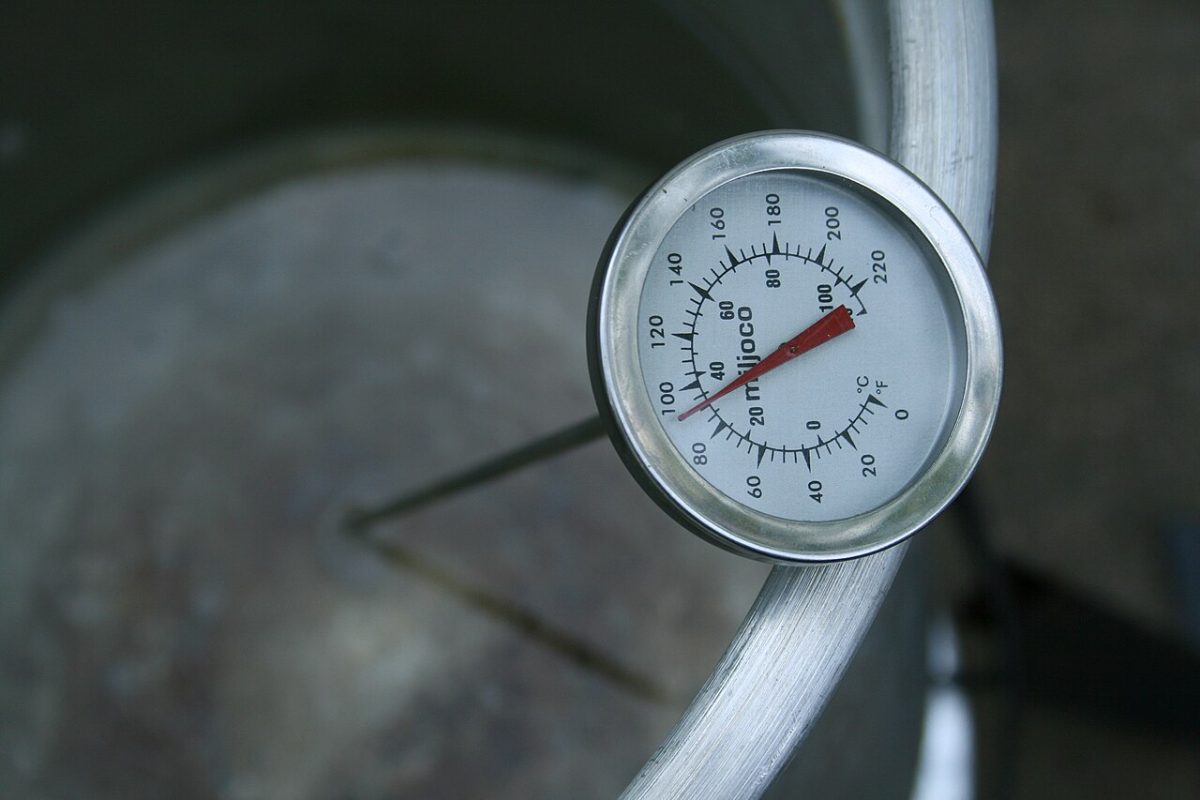
Featured photo: 2008-09-20 Thermometer reading by Ildar Sagdejev (Specious), CC BY-SA 4.0, via Wikimedia Commons.